Workout clothing works hard against sweat, friction, body oils, and repeated stretching. Learning how to care for workout clothing properly can protect its fit, comfort, and odor control. It can also reduce unnecessary replacement costs.
Mary Gagliardi, Ph.D., a laundry scientist known as “Dr. Laundry,” advises, “Wash sweaty garments promptly, because bacteria and oils become harder to remove over time.” Her guidance reflects a practical truth: leaving leggings in a closed gym bag overnight is rarely harmless. The damp fabric can develop a sour smell, while heat and friction may weaken elastic fibers.
Care begins before the washing machine. Turn garments inside out, separate them from rough towels, and check the care label. Cold water is usually gentler on stretch fabrics. A mild detergent can remove sweat without leaving a heavy coating. Fabric softener may reduce moisture-wicking performance, so skipping it is often wiser.
Do not overtrust fragrance.
Air-drying is safer for many sports bras, compression tops, and synthetic leggings. A hot dryer may shrink blends, damage elastane, or lock in odors that seemed gone. Still, every fabric behaves differently, and care labels deserve more attention than general advice.
I have found that small habits matter. Let clothing breathe before washing. Do not store it wet. Avoid aggressive scrubbing around printed logos and seams. Some mistakes are easy to repeat, especially after a tiring workout. This guide examines realistic routines, common laundry errors, and better methods for keeping performance clothing fresh, flexible, and dependable.
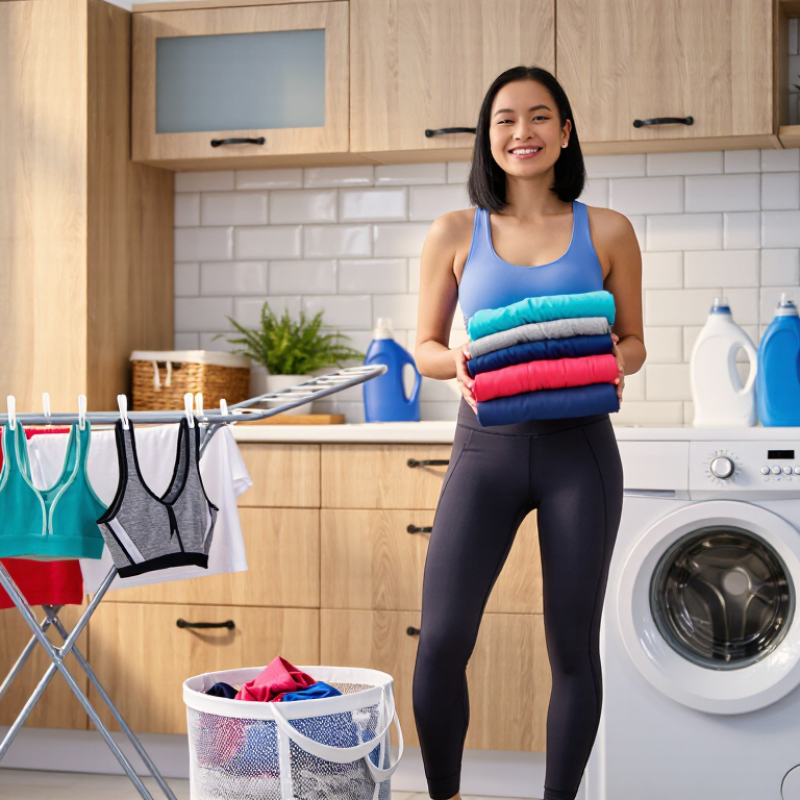
Workout clothing can lose its fit before it looks visibly damaged. Check the care label before washing. It may specify water temperature, cycle strength, drying limits, or prohibited treatments. These details matter because heat and agitation can alter length, width, and stretch recovery.
AATCC TM135 provides a professional method for measuring dimensional change after home laundering. Testers mark fabric areas, wash specimens under controlled conditions, then compare measurements after drying. Results commonly appear as percentage changes in length and width. A small negative value indicates shrinkage. A positive value may show growth or distortion. This method does not predict every user’s result, but it creates a repeatable benchmark.
Care at home should copy the label’s limits. Use cool or warm water when permitted, and avoid overloading the drum. Turn garments inside out before washing. High heat can stress elastic fibers and printed surfaces. Air drying often reduces unnecessary thermal exposure. I still occasionally choose a faster cycle and regret it when a waistband feels tighter. That is a useful reminder, not perfect practice.
The wider issue is material waste. Textile Exchange reported 124 million tonnes of global fiber production in 2023, with growth projected toward 160 million tonnes by 2030. Longer garment life can reduce replacement demand. After washing, measure a favorite garment occasionally. A simple record can reveal gradual dimensional change before comfort disappears.
Workout clothing needs more than a quick wash. Sort garments by fiber and color before loading the machine. Dark polyester leggings should not share a load with white cotton towels. Textile Exchange’s Materials Market Report 2024 recorded polyester as 59% of global fiber production in 2023. That scale makes careful synthetic-fiber care especially important. Check the care label, turn printed garments inside out, and close zippers.
Water heating uses most laundry energy. ENERGY STAR reports that heating water consumes about 90% of a washing machine’s energy. Choose cold or slightly warm water when sweat and odor levels allow it. Use a longer cycle only for heavily soiled items. A short, cold cycle often protects stretch fibers better. I still choose warm water after outdoor training. It feels safer, but that habit deserves review.
Wash technical fabrics separately from lint-producing cotton. Avoid excessive detergent, which can leave a stiff film around elastic fibers. Air-dry workout clothing on a shaded rack instead of using high heat. The European Environment Agency has warned that synthetic textiles can release microfibers during washing. A laundry bag may reduce some shedding, though results vary by fabric and product. Do not overfill the drum. Clothes need room to rinse properly.
Workout clothing often fails at the seams, waistbands, and printed areas. Care begins before the machine starts. I choose cold, gentle cycles for most synthetic shirts and leggings. Lower heat reduces elastic stress and fabric damage. Gentler tumbling may also reduce fiber abrasion.
The IUCN’s 2017 report estimates synthetic textiles create 35% of primary microplastics entering oceans. That figure deserves attention.
The European Environment Agency’s 2022 briefing identifies laundering as a significant microfiber release pathway. I wash garments inside out and close all zippers. I avoid half-empty loads. A full drum can reduce harsh movement, but overfilling increases rubbing. Use the smallest effective detergent dose. Extra rinses are not automatically better. Shorter cycles may reduce wear, although results vary between fabrics.
Cold washing does not guarantee zero shedding. Fabric type, garment age, detergent, and cycle length all matter. I inspect cuffs after training and air-dry clothing on a shaded rack.
High heat can weaken elastane and shorten service life. The advice is useful, but incomplete. I sometimes assume a longer gentle cycle is kinder; that assumption may be wrong.
Follow the care label and check local wastewater guidance. A microfiber filter can help, but it needs regular cleaning. Collected lint belongs in household waste, not drains.
Workout clothing needs gentler care than ordinary cotton garments. Sweat, body oils, and repeated stretching can weaken technical fibers over time. I wash these pieces soon after training, especially when they feel damp. Do not leave them sealed in a gym bag. That smell becomes difficult to remove.
Use a mild detergent and follow the care label carefully. A small amount is usually enough for one load. Too much detergent can remain inside the fabric and reduce breathability. I choose cool or lukewarm water, then turn garments inside out. This protects printed areas and helps detergent reach sweaty sections. Avoid fabric softeners. Their coating may cover moisture-wicking finishes and make the fabric absorb sweat less effectively. It can also trap odors.
Skip harsh bleach unless the label specifically permits it. Air drying is safer than high heat, which may damage elastic fibers. Hang leggings and shirts where air moves freely, but avoid strong, direct sunlight for long periods. I used to add extra detergent when clothes smelled stale. That made the problem worse. Washing the machine itself helped more than expected. Clean the detergent drawer and leave the door open afterward. I still occasionally overfill the washer, and the results are not perfect. Smaller loads clean workout clothing better, with less twisting and fewer lingering smells.
Typical maximum wash temperatures shown on care labels for common performance fabrics
Use a mild detergent and select the lowest temperature suitable for the fabric. Avoid fabric softeners because they can coat fibers and reduce moisture-wicking performance. Always check the garment care label before washing.
Workout clothing often feels dry before it is truly safe to store. I used to choose high heat for speed. The waistband became loose first. Elastane fibers need controlled temperatures because repeated heat can reduce their stretch recovery and shorten garment life.
Textile Exchange’s 2024 Materials Market Report estimates global fiber production reached 124 million tonnes in 2023. Polyester represented about 57% of that volume, while elastane remains a smaller but important performance fiber. This matters because a small elastane percentage can control compression, fit, and comfort. AATCC care guidance also treats drying instructions as performance protection, not decoration. Follow the sewn label, especially when it specifies low heat or line drying.
Turn garments inside out after training. Rinse heavy sweat promptly, then use a gentle cycle with cool or warm water. Avoid fabric softener when possible; residue may affect moisture movement. Remove leggings and sports tops while slightly damp, and lay them flat or hang them away from radiators and direct sunlight. High heat is not harmless. Use the lowest dryer setting, and stop when the fabric is just dry. Over-drying is an easy mistake.
I still forget this after late workouts. That habit needs work. Check elastic edges, seams, and recovery every few washes. If a waistband stays stretched after release, the garment may already be losing support.
Sources: Textile Exchange, 2024 Materials Market Report; AATCC textile care guidance.
Separate synthetic garments by color and fiber. Keep dark polyester leggings away from white cotton towels. Check each care label.
Choose cold or slightly warm water when sweat and odor are manageable. Cold water often protects stretch fibers better. I still choose warm water after outdoor training, but that habit needs review.
Heating water uses most of a washing machine’s energy. Cold washing can reduce energy use without needing special equipment.
Use a cold, gentle cycle for most shirts and leggings. Choose a longer cycle only when garments are heavily soiled. Shorter cycles may reduce wear.
Turn printed garments inside out and close all zippers. Avoid high heat and harsh tumbling. Inspect cuffs after training.
Use the smallest effective dose. Too much detergent can leave a stiff film around elastic fibers. More detergent is not always cleaner.
Air-dry garments on a shaded rack. High heat can weaken elastane and shorten clothing life. Avoid direct, intense sunlight when possible.
Yes, synthetic fabrics can release fibers during laundering. Fabric age, detergent, cycle length, and garment type all matter. Cold washing does not guarantee zero shedding.
A laundry bag may reduce some shedding, but results vary. A microfiber filter can help when cleaned regularly. Collected lint belongs in household waste, not drains.
Learning how to care for workout clothing properly can help preserve its shape, performance, and comfort. Start by checking the care label, especially because AATCC TM135 evaluates dimensional changes after washing. Sort garments by fiber type and color to reduce dye transfer and prevent fabrics with different care needs from being washed together. Since heating water uses about 90% of laundry energy, choose cold water whenever suitable. Gentle cycles can also reduce friction, fabric wear, and microfiber release, which the IUCN has associated with synthetic textile washing.
Use a mild detergent and avoid excessive amounts that may leave residue. Fabric softeners should generally not be used on moisture-wicking finishes because they can coat fibers and reduce their ability to manage sweat. Finally, follow the drying instructions carefully. High heat may weaken elastane, cause shrinkage, and shorten the useful life of workout garments. Air-drying or using a low-heat setting is often a safer choice when permitted by the care label.

Reba Fashion